Why Asia Dominates Global Bond Paper Supply
A large share of the bond paper and copy paper sold worldwide either originates from or moves through Asia. Large integrated pulp and paper producers in Indonesia are behind well-known consumer and office brands such as PaperOne, and other major Asian and Southeast Asian mills supply the raw stock behind dozens of regional and private-label brands sold across the continent. Alongside Indonesian production, paper originating from Brazil, Europe, and elsewhere frequently reaches Asian and other international buyers through distributors and exporters based in trading and logistics hubs across the region, which is why brands like Chamex, Navigator, and Reflex Ultra White show up on Asian wholesale price lists even though the pulp itself may be milled outside Asia.
For an importer, this means the exporter matters as much as the mill. Two shipments carrying the same brand name can differ in packaging quality, moisture control, and consistency depending on which exporter sourced, warehoused, and containerized the order. Evaluating an Asian bond paper exporter is therefore less about which brand they carry and more about how they handle sourcing, storage, and logistics before the container ever reaches port.
Specifications Every Importer Should Confirm Upfront
Bond paper is not a single product; it is a family of products that vary by weight, brightness, sheet size, and finish, and small differences in specification can make a shipment unsuitable for a buyer's intended use. Before placing an order, importers should confirm the exact grammage, most commonly 70, 75, 80, or 100 GSM for standard bond paper, since heavier paper suits business documents and lighter paper suits high-volume internal printing where cost per sheet matters most.
Sheet size and brightness matter just as much. A4 is the standard size across most of Asia, Europe, Africa, Oceania, and the Middle East, while Letter size dominates in North America, and shipping the wrong size to the wrong market is a costly and entirely avoidable error. Brightness, often quoted as a percentage or ISO rating, affects how crisp text and images appear; buyers focused on presentation-heavy printing typically look for higher brightness ratings, while buyers optimizing for cost accept a slightly lower rating.
Certifications and Documentation
Many paper brands reference sustainable forestry or chain-of-custody certifications on their packaging, and importers in markets with strict procurement or environmental requirements, such as government tenders in Australia or Canada, often need to verify these claims directly with the certifying body rather than taking packaging text at face value. A reliable exporter should be able to provide the documentation a specific brand carries, or be upfront when a certification cannot be independently confirmed for a particular shipment, rather than making blanket claims. Import documentation more broadly, commercial invoices, packing lists, certificates of origin, and phytosanitary or fumigation certificates for wood pallets, should be requested and reviewed well before the shipment departs, not after it clears the exporting country's customs.
Packaging and Moisture Control for Long-Haul Shipping
Paper is hygroscopic, meaning it absorbs and releases moisture in response to humidity, and that property makes packaging quality a genuine risk factor on any long-haul or tropical export route. Reams that are not properly sealed and cartons that are not adequately protected against condensation inside a shipping container can arrive at the destination port with curled sheets, jammed print runs, or visible cockling, none of which are covered by most standard freight insurance since they read as a packaging defect rather than transit damage.
Exporters accustomed to moving bond paper across humid, multi-leg shipping routes, such as those connecting Southeast Asia to Papua New Guinea, the Pacific, or the Middle East, typically use moisture-resistant wrapping on individual reams and reinforced cartons designed to withstand container humidity swings during a multi-week ocean transit. Importers evaluating a new exporter should ask specifically how paper is packed for their route, rather than assuming standard domestic packaging is sufficient for international freight.
Minimum Order Quantities and Container Logistics
Bond paper exporters generally structure pricing around container-level volume, since ocean freight economics favor full container load, or FCL, shipments over smaller less-than-container-load, or LCL, orders. A 20-foot container typically holds a substantial quantity of paper by weight, and importers placing their first order should ask an exporter directly what quantity fills a container efficiently for their target grade and size, since underfilling a container wastes freight cost that gets absorbed into the per-ream price.
Smaller importers, or those testing a new supplier relationship before committing to a full container, should ask whether LCL or partial-container arrangements are available, and what the price difference looks like compared to a full container order. Some exporters can consolidate a smaller paper order alongside other product lines, such as thermal paper rolls or office stationery, to help a new buyer reach efficient shipping volume without overcommitting on a single product category.
- Confirm exact GSM, sheet size, and brightness specification in writing before production or picking begins
- Request documentation for any certification claims rather than relying on packaging text alone
- Ask how paper is packed and protected against humidity for your specific shipping route
- Clarify FCL versus LCL options and how each affects landed cost per ream
- Get a realistic lead time from order confirmation to vessel departure, and confirm it against past shipment history if possible
How Currency Movements and Freight Costs Affect Pricing
Bond paper pricing on the export market is influenced by more than just pulp and mill costs. Currency exchange rates between the exporter's local currency and the buyer's settlement currency, usually US dollars for most international paper trade, can shift the effective price of a shipment between the time a quote is issued and the time payment is due, particularly on longer production and shipping timelines. Importers working with exporters who quote and invoice consistently in a single stable currency generally find pricing easier to plan around than those dealing with frequent currency-driven repricing.
Ocean freight rates are the other major variable, and they can move meaningfully based on global shipping capacity, fuel costs, and seasonal demand on a given trade lane, sometimes independent of anything happening in the paper market itself. A landed cost quote that separates the ex-works or FOB paper price from the freight component gives an importer a clearer view of which part of the price is stable and which part is subject to shipping market conditions, and makes it easier to time larger orders around favorable freight windows when that flexibility exists.
Lead Times and Communication During Production and Transit
Lead time is one of the most frequently underestimated variables in a first international paper order. Between confirming specification, sourcing or picking stock, packing, booking a vessel, and clearing export customs, the gap between order confirmation and container departure can run from a couple of weeks to well over a month depending on order size and how much of the requested brand mix is already held in warehouse versus needing to be sourced. Ocean transit time then adds further weeks depending on the destination port and whether the route involves transshipment.
Because so many steps sit between order and delivery, communication quality during that window matters as much as the paper itself. A reliable exporter should be able to confirm, at minimum, when the order is packed, when it is loaded, the vessel and estimated departure, and the estimated arrival at the destination port, so an importer can plan downstream distribution rather than guessing. Importers who have been burned by a previous supplier going quiet between order confirmation and delivery should treat proactive, specific updates as a genuine differentiator when choosing an exporter.
Sample Requests and Verifying a Shipment Before It Leaves Port
Many established exporters are willing to send a small physical sample ahead of a full order, particularly for a first-time buyer who wants to verify sheet feel, brightness, and print performance on their own equipment before committing to a container. Requesting a sample is a normal, expected step in international sourcing and should not be seen as an imposition on the exporter, since it protects both sides from the cost of a mismatched full shipment.
For larger orders, some importers also arrange third-party pre-shipment inspection, an independent check of quantity, packing, and specification conducted at the exporter's warehouse before the container is sealed and loaded. This is more common on very large or first-time orders than on routine repeat shipments, but it is a reasonable option to raise with an exporter when the order size justifies the added cost and time.
Starting With a Trial Shipment Before Scaling Up
For an importer working with a new bond paper exporter for the first time, placing a smaller trial shipment, even at a less efficient per-unit freight cost, before committing to a full container program is a reasonable way to validate specification accuracy, packaging quality, and communication before a larger volume is at stake. A trial order that arrives on spec, well packed, and roughly on the timeline promised is a much stronger basis for a long-term supply agreement than a sales conversation alone.
This is especially worth doing when an importer is sourcing a brand they have not personally handled before, since photographs and specification sheets only go so far in confirming how a particular ream actually performs on a specific printer or copier fleet at the destination. A short trial period, run in parallel with continuing an existing supply arrangement rather than replacing it outright, keeps risk low while a new exporter relationship is being evaluated.
Where the Philippines Fits in the Asian Export Landscape
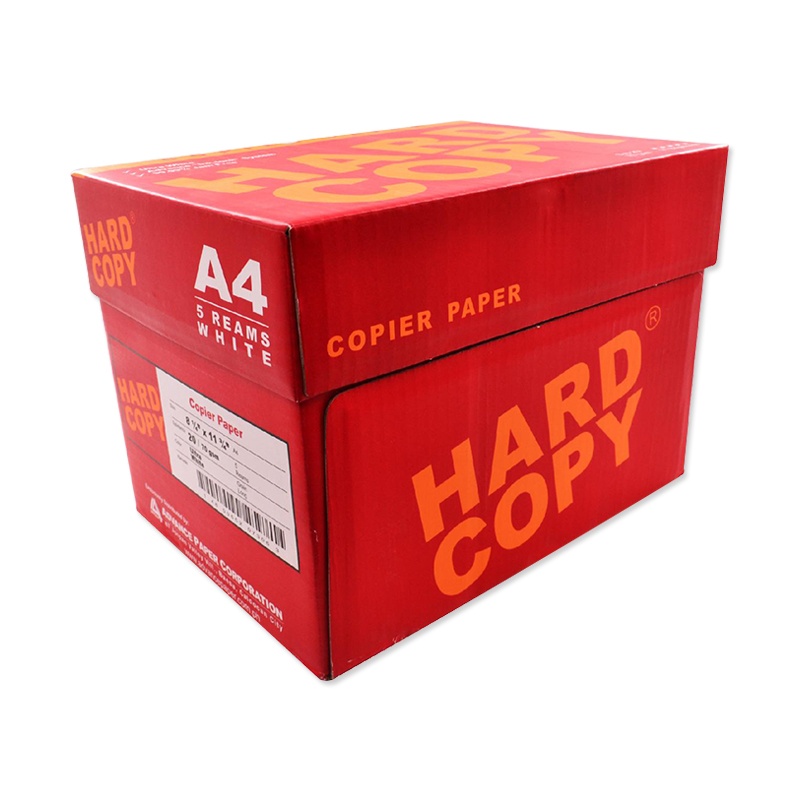
The Philippines occupies a useful position for bond paper exporters serving Pacific and Southeast Asian markets. DTI-registered exporters based in the country can source and consolidate a wide range of brands, from Double A and PaperOne down to more economical hard copy bond paper lines, and ship them to nearby markets such as Papua New Guinea, Australia, and Indonesia with shorter transit times than shipments originating further north in Asia, while still maintaining reach to more distant markets like Canada, South Africa, South Korea, the UAE, and Singapore.
RC Printshoppe and General Merchandise, a DTI-registered wholesaler and exporter based in Southern Leyte, supplies bond paper across more than two dozen brands to both domestic Philippine buyers and international importers, and works with buyers to confirm specification, packaging, and container logistics before an order is confirmed. Overseas buyers evaluating a new paper supply chain are welcome to request a quote with their target specification and destination port.