
Why the Supplier Relationship Matters More Than the First Price Quote
It is easy to choose an office supplies wholesaler based on whichever quote looks lowest, and just as easy to regret that choice three months later when deliveries are late, stock substitutions show up unannounced, or the person who answered the phone during the sales process disappears once the order is placed. A wholesale supplier is not a one-time transaction; for most businesses it becomes a recurring relationship that runs for years, which means reliability, communication, and consistency matter at least as much as the initial price per ream.
The good news is that legitimate, reliable wholesalers tend to share a recognizable set of characteristics, and a short evaluation process before the first order can save a business from a costly supplier switch down the line.
Verify Business Legitimacy First
In the Philippines, a legitimate wholesale or export business should be registered with the Department of Trade and Industry, and for larger or export-oriented operations, typically holds additional registrations relevant to its trade. Asking a prospective supplier for their DTI registration is a reasonable and normal part of vetting a new business relationship, not an awkward or overly cautious request, and a supplier that hesitates to confirm basic registration details is worth treating with caution.
Beyond registration, a legitimate wholesaler should have a verifiable physical address, consistent contact information, and ideally a track record that can be checked through existing customers, industry reputation, or an established online presence. A supplier operating only through informal channels, with no fixed address or verifiable registration, carries more risk regardless of how competitive their pricing looks.
Evaluate Product Range and Brand Availability
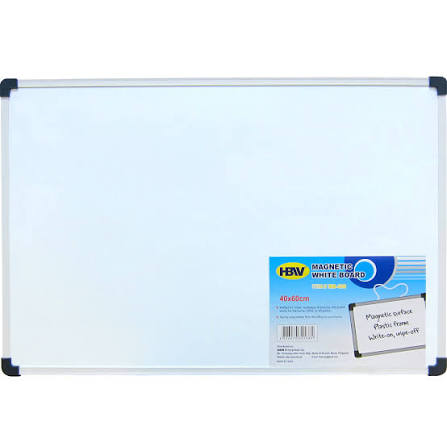
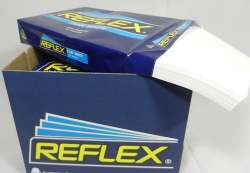
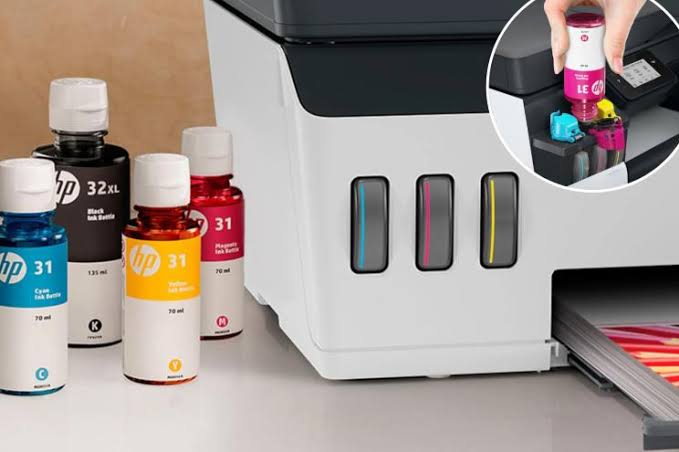
A strong office supplies wholesaler typically carries a genuinely broad catalog, spanning bond paper across multiple brands and GSM grades, printer ink and toner, envelopes and folders, pens and staplers, notebooks, and whiteboards, rather than a narrow slice of one category. Breadth matters because it lets a business consolidate purchasing with one supplier instead of juggling several, and it usually signals a more established operation with real warehousing and sourcing relationships behind it.
Ask specifically which brands a supplier stocks and how consistently. A supplier that can name specific brands, Double A, PaperOne, Xerox Vitality, Chamex, Navigator, and explain typical availability is generally more trustworthy than one that speaks only in vague terms about 'quality paper' without naming what is actually in stock.
Pricing Transparency
Reliable wholesalers are generally comfortable discussing how their pricing works, including what quantities trigger better tiers, how pricing responds to paper market fluctuations, and whether there are additional charges for delivery, packaging, or rush orders. A supplier who avoids specifics or gives inconsistent answers to the same pricing question asked twice is a signal worth taking seriously before placing a large order.
Assess Delivery Reach and Logistics Capability
For a business anywhere in the Philippines outside Metro Manila, delivery reach is a practical concern, not a formality. Ask a prospective supplier directly whether they regularly ship to your region, what carrier or freight arrangement they use, and what typical delivery times look like from order confirmation. A supplier with established interisland shipping experience will usually be able to answer these questions specifically, with real timeframes, rather than in general terms.
For businesses that also need international shipments, whether as part of a multinational operation or an export-facing business themselves, it is worth confirming whether the supplier has actual export experience and documentation capability, rather than assuming any domestic wholesaler can handle cross-border logistics on request.
Why Local Presence and Regional Reach Matter
A wholesaler's physical location relative to a buyer's own operations affects more than shipping cost; it affects how well the supplier actually understands regional logistics realities. A supplier based in, or with established distribution into, the Visayas and Mindanao is likely to have more realistic delivery time estimates and packing practices for interisland shipping than one that primarily serves Metro Manila and treats provincial delivery as an afterthought.
This matters just as much for businesses that need international shipments. A wholesaler that can point to an actual track record shipping to specific overseas markets, rather than simply saying they 'can arrange export,' is a meaningfully safer bet for an importer, since export logistics, documentation, and freight relationships take time to build and are not something a purely domestic supplier can improvise convincingly on a first order.
Wholesaler vs a Retail Store Selling in Bulk
It is worth distinguishing between a genuine wholesaler and a retail store or general merchandise shop that is simply willing to sell a larger quantity at a modest discount. The difference usually shows up in pricing structure, product range, and business registration: a true wholesaler typically has formal pricing tiers tied to volume, sources directly from manufacturers or authorized distributors rather than buying retail stock to resell, and holds DTI registration appropriate to wholesale or export trade rather than retail alone.
Buying from a retail-style seller at a bulk discount is not inherently a bad option for very small or occasional orders, but it rarely offers the pricing, consistency, or logistics support that a genuine wholesaler can provide once order volume grows. Businesses planning to make wholesale purchasing a recurring part of their operations are generally better served working with a supplier built around wholesale and export trade from the outset.
Check for Quality Consistency, Not Just a Good First Order
A strong first order is not proof of a reliable long-term supplier. The real test is whether the fifth order matches the quality and specification of the first one. Businesses evaluating a new wholesaler should ask how the supplier handles quality control, whether they can guarantee the same brand and grade across repeat orders, and what happens if a specific brand becomes temporarily unavailable, do they substitute silently, or do they call first.
It is reasonable to start with a smaller trial order before committing to a large standing arrangement, specifically to observe consistency across at least two or three separate deliveries before scaling up volume.
How Payment Terms and Order Flexibility Signal Reliability
Payment terms are a practical signal worth paying attention to during evaluation, not just a back-office detail. An established wholesaler that has been in business long enough to build trust with regular customers will often be willing to discuss reasonable payment arrangements for repeat buyers, while a newer or less stable operation may insist on full payment upfront with no flexibility, which is not necessarily disqualifying but is worth noting as part of the overall risk picture.
Order flexibility matters too. A wholesaler that can accommodate a slightly adjusted quantity on short notice, or that is upfront about what cannot be adjusted once an order is confirmed, is easier to plan around than one that either overpromises flexibility it cannot deliver or offers none at all. Asking directly how a supplier handles a last-minute quantity change or a rush request is a reasonable question during the evaluation stage, since the answer says as much about the business's operational maturity as any brochure would.
What a Good Onboarding Process Looks Like
The way a wholesaler handles the first weeks of a new business relationship is often a preview of how they will handle the rest of it. A supplier that takes time to understand actual usage volume, confirms specification in writing before the first shipment, and sets realistic expectations about lead time is signaling an operation built around repeat business rather than one-off transactions.
By contrast, a supplier that rushes a first order through with minimal clarification, or that is vague about what happens if something goes wrong with a shipment, is more likely to be difficult to work with once problems inevitably arise, since every supplier relationship eventually involves a delayed shipment, a specification mismatch, or a damaged carton at some point. How a supplier responds to that first hiccup, promptly and with a clear resolution, or defensively and slowly, tends to be the real test of reliability.
Red Flags Worth Taking Seriously
A handful of warning signs tend to correlate with unreliable wholesale suppliers, and noticing even one during the evaluation process is worth pausing over before placing a large order.
- Reluctance to confirm DTI registration or provide a verifiable business address
- Pricing that seems significantly below every competitor with no clear explanation
- Vague answers about which specific brands are actually in stock
- No clear answer on delivery timeframes or shipping method to your region
- Pressure to commit to a large order before a smaller trial order has been delivered
How Many Suppliers Should a Business Keep on Hand?
Even after settling on a primary wholesale supplier, many purchasing teams find value in maintaining a secondary relationship with a smaller order volume, specifically as a hedge against a disruption at the primary supplier, whether that is a temporary stock shortage, a shipping delay, or a business closure. This does not need to be an equal split of order volume; a business might route ninety percent of its purchasing to a trusted primary wholesaler while keeping a much smaller standing relationship with a backup supplier active enough to reorder quickly if needed.
For most small and mid-sized businesses, a single well-vetted primary wholesaler covering the bulk of office supply needs, evaluated periodically rather than assumed to be permanent, strikes the right balance between administrative simplicity and supply chain resilience.
Start With a Trial Order and a Direct Conversation
The most reliable way to evaluate a wholesaler is to talk to them directly and place a modest trial order before scaling up. A supplier willing to answer specific questions about registration, brands, pricing tiers, and delivery timeframes, and who follows through consistently on a first order, is generally worth building a longer relationship with.
RC Printshoppe and General Merchandise is a DTI-registered wholesaler and exporter based in Southern Leyte, supplying bond paper, office supplies, school supplies, and thermal papers to businesses across the Philippines and to international buyers. Businesses evaluating a new supplier are welcome to reach out directly and request a quote to see how the process works before committing to a larger order.