Why Buying Office Supplies Wholesale Makes Sense
Every business, from a five-person accounting firm to a 300-seat call center, runs through the same list of consumables week after week: paper, ink, folders, pens, staplers, notebooks. Bought one pack at a time from a retail store, these small purchases add up to a surprisingly large and unpredictable line item. Wholesale buying solves this by locking in better unit pricing and shifting the rhythm of procurement from reactive to planned.
The math is straightforward. A retail ream of copy paper carries retail margin, retail packaging, and the overhead of a store that has to mark up every SKU to survive on foot traffic. A wholesale supplier selling by the box, the carton, or the pallet spreads its overhead across much larger volumes, and that saving is passed down the chain. For a business that goes through dozens of reams of bond paper a month, the difference between retail and wholesale pricing over a year is rarely trivial.
There is also a reliability argument that often matters more than price. Running out of printer paper mid-billing-cycle or discovering the last box of pens is empty on a Monday morning is a small operational failure that is entirely avoidable. A standing wholesale order, sized correctly and reordered on a schedule, removes that risk from the list of things an office manager has to think about.
What Falls Under Office Supplies (and Why Variety Matters)
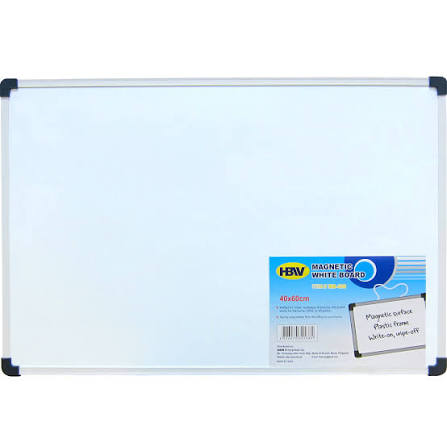
Office supplies wholesale is a broader category than most first-time buyers expect. It typically spans printer and copier paper, printer ink and toner cartridges, envelopes and folders, pens and markers, staplers and other desk hardware, notebooks and pads, and whiteboards and presentation supplies. A business that buys all of these from a single office stationery supplier, rather than piecing orders together across several vendors, simplifies its purchasing workflow and usually earns better terms as total order value grows.
Consolidating suppliers also reduces the number of delivery windows a receiving desk has to manage, the number of invoices accounting has to reconcile, and the number of relationships a purchasing officer has to maintain. For a growing company, that administrative simplification is worth almost as much as the unit-price savings themselves.
Paper Products Are Usually the Biggest Line Item
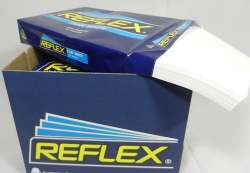
Across most offices, bond paper and copy paper account for the single largest share of the office supplies budget by volume. This is where brand and grade choices matter most, since paper quality directly affects print quality, printer maintenance, and how a document looks when it lands on a client's desk. Brands like Double A, PaperOne, Xerox Vitality Multipurpose Printer Paper, and Navigator are generally recognized in the Philippine market for consistent sheet quality, while more economical hard copy bond paper options serve high-volume internal printing where presentation matters less than cost per ream.
Because paper is bought so frequently and in such quantity, it is usually the first category businesses convert to a wholesale arrangement, even before they consolidate the rest of their supply list.
Ink, Toner, and Consumables Are the Second-Biggest Cost Driver
After paper, printer ink and toner cartridges tend to be the next largest recurring cost, and one of the least predictable, since usage depends heavily on how graphics-heavy a business's printing actually is. A department that prints mostly text documents will burn through toner far more slowly than one printing color proposals, marketing materials, or photo-heavy reports, which means ink and toner budgets are harder to standardize across an organization than paper budgets are.
Buying ink and toner wholesale alongside paper, rather than treating it as a separate purchase, lets a business negotiate a single combined order and avoid the common trap of running low on cartridges while sitting on an oversupply of paper, or the reverse. Bundling also gives a supplier a fuller picture of a customer's actual print volume, which can inform better recommendations on cartridge yield and reorder timing.
Balancing Price and Quality When Comparing Supplier Bids
When a business requests quotes from more than one wholesaler, it is tempting to rank them purely by the bottom-line total. That approach misses two variables that matter just as much over the life of the relationship: what exactly is being quoted, and how confident the buyer can be that the same product will show up on the next order. A quote for an unnamed 'copy paper' brand at a low GSM is not directly comparable to a quote naming Double A or PaperOne at a specified grade, even if the headline number looks similar.
A useful habit is to ask every supplier being compared to quote against the exact same specification sheet, brand, GSM, sheet size, quantity, and packaging, so that the comparison is actually apples to apples. Suppliers who resist specifying brand and grade in writing, or who quote in vague terms, tend to be the ones who substitute stock later without notice.
Calculating How Much to Order
The most common wholesale buying mistake is sizing orders off gut feeling rather than actual usage. A better approach starts with a simple audit: track paper, ink, and consumable usage for four to six weeks, then extrapolate to a monthly and quarterly figure. Add a buffer of roughly two to three weeks of stock to account for delivery lead time and unexpected demand spikes, such as a large print run for a bid submission or an exam season for a school.
Seasonality matters more than most buyers assume. Schools and training centers see sharp spikes at the start of each term. Accounting firms and businesses with fiscal-year reporting see spikes around tax season and year-end closing. Government offices and BPOs often have their own procurement cycles tied to budget releases. Once a business identifies its own pattern, it can time larger wholesale orders to land just ahead of peak demand rather than scrambling to reorder mid-crunch.
- Track actual monthly consumption per item for at least one full cycle before setting standing order quantities
- Build in a two to three week buffer above expected usage to absorb delivery delays
- Identify your organization's seasonal peaks and place larger orders ahead of them, not during them
- Separate fast-moving items like bond paper from slow-moving items like whiteboards to avoid overstocking the latter
Domestic Delivery vs Working With a Regional Supplier
The Philippines' geography, spread across islands with varying levels of shipping infrastructure, makes supplier location a real operational factor rather than a minor detail. A wholesaler that already moves bulk office supplies across the country, from Metro Manila down to the Visayas and Mindanao, tends to have freight relationships and packing practices tuned for interisland transit, which matters when a shipment has to survive multiple handling points before it reaches a receiving dock in a provincial office.
RC Printshoppe and General Merchandise, based in Zone V, Sogod, Southern Leyte, ships wholesale orders domestically across the Philippines and has established export lanes to markets including Papua New Guinea, Australia, the UAE, Singapore, Canada, South Africa, South Korea, and Indonesia. For a Visayas- or Mindanao-based business, working with a supplier already positioned in the region can mean shorter transit times than routing everything through a Manila-based distributor.
Common Mistakes Businesses Make When Buying in Bulk
The most expensive mistake is chasing the lowest unit price without checking consistency. A supplier who is cheapest on one order but substitutes an unfamiliar brand or a lower grade on the next shipment costs more in printer jams, reprints, and staff frustration than the original savings were worth. Consistency in grade, brand, and packaging from order to order is worth paying a small premium for.
The second common mistake is under-ordering out of caution on a first purchase, which forfeits the volume pricing that makes wholesale buying worthwhile in the first place, then over-correcting on the next order once the value becomes clear. It is usually better to start with a supplier conversation about realistic minimum order quantities and pricing tiers before committing, rather than guessing and adjusting after the fact.
Questions to Ask Before You Commit to a Wholesale Order
A short supplier conversation before the first order can save months of friction later. Buyers should ask directly about brand availability and whether the supplier can substitute equivalent stock if a specific brand is temporarily out, what the minimum order quantity is for pricing to kick in, what the typical lead time is from order confirmation to delivery, and whether pricing is fixed for a period or subject to change with paper market fluctuations.
- Which specific brands and GSM grades do you currently stock, and how consistent is availability month to month?
- What is the minimum order quantity to unlock wholesale pricing tiers?
- What is the typical lead time for a standard reorder versus a first-time order?
- Do you offer standing or recurring order arrangements for regular customers?
- How is paper packed and protected for interisland or long-distance delivery?
Reducing Waste While Buying in Bulk
A concern some purchasing teams raise about bulk buying is whether it encourages waste, ordering more than is actually needed simply because the per-unit price is attractive. In practice, the opposite is usually true when order sizing is based on tracked consumption rather than guesswork, since a business buying to a measured usage pattern tends to have less shelf-expired, over-ordered stock sitting unused than a business making frequent small reactive purchases without any tracking at all.
Businesses that want to be deliberate about this can pair a wholesale ordering schedule with a simple internal inventory check, a shared spreadsheet or a supply cabinet log, so that reorder points are based on actual remaining stock rather than a fixed calendar date. This keeps the cost benefits of bulk buying without accumulating supplies faster than they are consumed.
Getting Started With a Wholesale Supplier
Switching from retail purchasing to a wholesale arrangement does not need to happen all at once. Many businesses start by moving their highest-volume item, usually bond paper, to a wholesale supplier, then expand the relationship to ink, toner, and general office stationery once the first order proves reliable. That gradual approach lets a purchasing team validate quality and service before committing a larger share of the budget.
RC Printshoppe and General Merchandise supplies bond paper, printer ink and toner, envelopes and folders, pens and staplers, notebooks, and whiteboards on a wholesale basis to businesses across the Philippines, alongside export orders for international buyers. Businesses ready to move their office supply purchasing to wholesale pricing are welcome to request a quote for their specific volume and product mix.